Tuesday, June 15, 2010

A broken pipe and the broken window fallacy


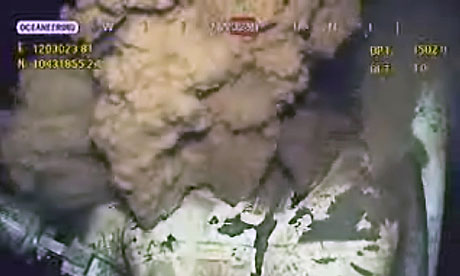
The bursting of the BP oil pipe in the Gulf of Mexico, which is gushing millions of barrels of petrol into the ocean, despoiling hundreds of miles of valuable beach-front, needlessly killing legions of animals, and diverting thousands of Americans from productive pursuits to the cleanup of perhaps the greatest environmental disaster in history, is going to be a positive for US GDP. So sayeth analysts at J.P Morgan:
Still, cleaning up the spill will likely be enough to slightly offset the negative impact of all this on GDP, J.P. Morgan said. The bank cites estimates of 4,000 unemployed people hired for the cleanup efforts, which some reports have said could be worth between $3 and $6 billion.

“If realized, this would likely mean a near- to medium-term boost to activity that might offset the drags,” Feroli said.

Lord Keynes himself would have been proud of such shoddy economic "analysis", which nowadays passes as wisdom. In his magnum opus The General Theory of Employment, Interest and Money, Keynes wrote:
If the Treasury were to fill old bottles with bank notes, bury them at suitable depths in disused coal mines which are then filled up with town rubbish, and leave them to private enterprise on the well-tried principles of laissez faire to dig them up again… there need be no more unemployment and, with the help of the repercussions, the real income of the community and its capital wealth also would probably become a great deal greater than it actually is.

Thursday, February 18, 2010

Wealth Comes From Rising Prices?


In an interview with DemocracyNow.org, Nobel laureate Joe Stiglitz, modern Keynesian (ahem) economist, falls prey to the broken window fallacy by claiming that rising prices can create wealth. Skip to 35:50 in the video to watch the fun. Is it my imagination, or does the body language of so-called economists like Stiglitz and Krugman betray the fact that they seem to know, deep down, that they're spouting nonsense?

Transcript: In Copenhagen, if we had succeeded in raising the price of carbon, uhh, the cost of carbon, uh, of emissions that pollute the atmosphere, that are going to impose enormous costs all over the world, if we had succeeded in doing that, that would've provided a market signal. It would've told firms, you have tooooooo invest, to reduce, uh, your carbon emissions. Uh, there would've been this retrofitting of the global economy to meet the needs of, uh, global warming. That would've stimulated an enormous, uhhh, level of investment, stimulated a lot of, uh, of spending, and that would've been the critical thing that could've gotten us out of, of the current great recession.

In the real world, what is essential for wealth creation is for prices to fall, not rise.

Thursday, January 28, 2010

New Item on Obama's To-Do List: Read Bastiat

If Obama had read Bastiat, not only would he be more informed in matters of economics, he also wouldn't have offered this bit of irony during his State of the Union speech:
What incredible irony that Obama gave the specific example of a glazier as a “beneficiary” of the “stimulus plan.” Bastiat would have gotten a kick out of that!
H/T Lew Rockwell, quoting Jeff Papazian.

Saturday, January 23, 2010

Broken Microsoft Windows

Microsoft Windows Vista was broken in many ways. Upgrading to Windows 7, which fixes some of Vista's boneheaded features like UAC, would improve productivity, resulting in more wealth creation for its users (or so I hear; I'm a Mac user).

But to what does the author of this article attribute the new wealth? The (temporary) jobs needed to upgrade millions of computers to Windows 7.
Microsoft Corp. says it won’t be the only one to benefit from sales of its new Windows 7 software. The local economy could see a lift, too.

...Microsoft hired research firm IDC Corp. of Framingham to conduct a study of the ripple effect of the Windows 7 launch. It found that American companies could hire an estimated 25,000 additional workers to cope with the Windows 7 launch, including about 2,500 new jobs in Greater Boston, through the end of 2010.
Jobs are easy to find -- nature creates them for us. It's productivity that matters. Windows 7 should make PC users more productive, which is where the real win comes from.

Tuesday, January 19, 2010

Haiti's earthquake; time to celebrate!


Thank goodness Haiti has been leveled because now its people can enjoy a booming economy! Nancy Pelosi, a recent graduate of the school of Broken Window Economics, elaborates:


"I think that this can be an opportunity for a real boom economy in Haiti," she told reporters in the Capitol, drawing from her experience in San Francisco. Haiti "can leap-frog over its past challenges, economically, politically, and demographically in terms of the rich and poor and the rest there, and have a new -- just a new, fresh start," the California Democrat added.


We should all be so lucky as to have our country leveled, think of all the jobs it would create!

Friday, July 31, 2009

Cash to Break Engines

It's like watching a window get smashed, or a house get demolished…


h/t Marcin.

Monday, June 1, 2009

Broken Window Propaganda

Every cockamamie economic plan put forward by the State is always accompanied by propaganda, tailored to the credulous masses, explaining its ostensible benefits. It is no surprise then to see the latest scheme to create "green jobs" comes with a colorful pamphlet explaining the economic virtues of the latest "5 year plan" crafted by our ever-benevolent central planners. Let's take a look:


Is it any wonder that the miraculous plan, which wants us to believe that it will lead to an environmentalist utopia, is based on the most basic economic fallacy of them all? That by taxing and destroying the wealth of one part of an economy, demand will be spurred in another part of the economy, creating jobs and benefiting us all. This propaganda flyer gets bonus points for the irony of having windows installed to illustrate the economic benefits of the green plan.


Thanks Dan for the pointer to the propaganda piece.

Thursday, April 30, 2009

Tuesday, February 10, 2009

Burning down the house


If it weren't bad enough that Bushfires are sweeping across large parts of Australia, killing scores of people, leaving many more homeless, and destroying hundreds of millions of dollars worth of property, we now have to suffer from the rank asininity of Keynesian "economists" suggesting that the natural disaster will have beneficial economic consequences:

As an aside, the bushfires may help the nation fend off recession: Goldman Sachs JBWere economist Tim Toohey says rebuilding will generate an economic stimulus equal to 0.25-0.4 per cent of GDP over the next 18 months.

"As tragic as the events of the past two days have been, the rebuilding phase will provide a catalyst for economic growth in coming months, even if the personal and environmental cost takes years to recover," he says.

One wonders whether the suspected arsonists were in fact Keynesians executing another ridiculous "stimulus plan".

Thursday, February 5, 2009

Police smash window repairer's business ploy

The LA Times is reporting that Police smash window repairer's business ploy:
Times were so tough for window repairman Timothy Carl Klenke, police say, that he decided to take proactive measures: He armed himself with a slingshot and began cruising around the city, shattering at least five windows and car windshields as he went.

"The statements he gave to officers led them to believe he was out to drum up business and was prepared to go out and do some more damage," Redlands police spokesman Carl Baker said Tuesday.

Witnesses reported seeing Klenke, 50, driving around in his Honda in the areas where the vandalism occurred. When police arrived at his Redlands home, they said, they found a slingshot in his car along with projectiles that matched those used to smash the windows and windshields.

Baker said Klenke, who was arrested Monday, had planned to contact the victims later and offer to repair the windows for a fee.

"I'm sure it has something to do with the economy," Baker said. "Everybody is hurting now."

Almost every economic policy proposed by Congress is some variant of the Broken Window Fallacy. But when the same policy ideas are carried out by a private citizen it's called "vandalism". If Klenke had been able to formalize his ideas into an economic theory, he probably would have been awarded a Nobel Prize; just like this guy.

Photo by Rich Anderson. Used under a Creative Commons license.

Monday, September 1, 2008

Gustav is economically positive!


According to Chris Isidore over at CNN:

Economists agree that in the long run, a major hurricane or other natural disaster can actually help lift economic activity because of insurance payments and federal assistance.

In the short-term, the destruction and the disruptions can be a hit to the economy.


Anyone who believes this nonsense has no business calling themselves an "economist". Destruction of life and property is always economically harmful as it destroys wealth. Beware: the next "stimulus" package may involve burning down houses and shooting the population to "lift economic activity".

Monday, July 28, 2008

Bill "Blow Them Up" Gross


Investment Outlook
Bill Gross | August 2008

Make no mistake, the current conundrum that must be solved is: how to make the price of 120 million U.S. barns stop going down in price and then to make them go up again. That, however, is easier said than done. One of the wisest men I know has this serious but admittedly impractical solution: have the government buy one million new/unoccupied homes, blow them up, and then start all over again. (Emphasis added.)


If it were practical, Bill Gross would advocate it.

Monday, April 14, 2008

Charles Payne: break a window, help the economy


Charles Payne opines on the benefits of breaking things to improve the economy. It shouldn't be a surprise that some folks on Wall Street misunderstand this most basic economic principle, when it eludes noted "economists" such as Paul Krugman.

I believe the source of the fallacy is many economists (and Wall Street traders) think of the economy in terms of aggregate statistics such as GDP, CPI and unemployment numbers. If one accepts that these things are useful measures of the health of an economy then one could conclude that destroying property is economically beneficial (since it will increase GDP and help to decrease unemployment statistics in the short term).

If, on the other hand, one dismisses these statistics as meaningless (as they are), and measures the health of the economy by how much real wealth has been created, then one would instantly dismiss the fallacious line of reasoning.

I'm sorry Mr Payne, but you simply cannot destroy your way to prosperity.

Tuesday, March 25, 2008

Demolish houses to fight the recession?


Holman W. Jenkins, Jr. of the Wall Street Journal writes:
A great deal of housing debt was created in the last few years to give speculative buyers nominal title to homes that they no longer want. Any postmortem will also show that too much government subsidy for the creation of housing debt was an original sin at the root of today's mess.
Too true. But then he writes:
The result is not unlike pollution -- a market "externality" that imposes unfair costs on others as a result of some people's over-speculation in now decaying, market-depressing, neighborhood-degrading housing.
Wait, how does extra housing impose unfair costs on others? Are we thinking about the same others? If there is too much supply, prices fall—making housing more accessible to those who are looking to buy. This is not unlike the bust after the internet boom in 2000. A lot of great capital infrastructure was bought at low prices, and subsequently put to good use. Irrational investors lost, but the capital created was still put to use afterward. Extra fiber didn't impose "unfair costs" on others, did it?

Here's the Broken Window Watch winner of the week:
When politicians understand this, they may finally have something useful to contribute. The shortest road back from this perdition, as improbable as it may sound, would be to foreclose on and demolish some of the least-wanted houses, with taxpayer money if necessary.
That's right. Use taxpayer money to demolish houses to prop up their prices. What a great strategy! The immediate effect is to prop up prices (making existing homeowners happy) and create work for demolition teams. There is no way there would be any unseen effects, would there?

Tuesday, March 11, 2008

The Fed is always optimistic

Not quite standard broken window fare, but relevant still relevant to the law of unintended consequences.

Bernanke: Subprime hit could top $100B
July 19 2007: 4:44 PM EDT

NEW YORK (CNNMoney.com) -- Losses in the fast-unraveling subprime lending market could top $100 billion, but the Federal Reserve is taking measures to protect borrowers, according to Fed Chairman Ben Bernanke.

"The credit losses associated with subprime have come to light and they are fairly significant," Bernanke told the Senate Banking Committee in a second day of testimony on the Fed's twice-yearly economic report.

"Some estimates are in the order of between $50 billion and $100 billion of losses associated with subprime credit problems," he said, referring to a segment of the mortgage market that caters to borrowers with shaky credit.


Subprime losses won't top $500 billion: Bernanke
Thu Jan 17, 2008 11:52am EST

WASHINGTON (Reuters) - Federal Reserve Chairman Ben Bernanke said on Thursday that losses in the U.S. subprime mortgage market may have reached $100 billion so far and could climb, but would not top $500 billion.

Thursday, March 6, 2008

A Broken Window classic: 911 was good for the economy

Any normal person would intuitively understand the absurdity of the proposition that 911 had beneficial consequences for the US economy. But Paul Krugman is not any normal person. He's a well known economist and columnist for the New York Times. He has a legion of acolytes who follow his words as if they were gospel. And he happens to be the most egregious sophist in the realm of economic commentary.


In a classic instance of the Broken Window Fallacy, Krugman claimed that 911 had potentially favorable economic effects.

So the direct economic impact of the attacks will probably not be that bad. And there will, potentially, be two favorable effects.

First, the driving force behind the economic slowdown has been a plunge in business investment. Now, all of a sudden, we need some new office buildings. As I've already indicated, the destruction isn't big compared with the economy, but rebuilding will generate at least some increase in business spending.

Second, the attack opens the door to some sensible recession-fighting measures ... Now it seems that we will indeed get a quick burst of public spending, however tragic the reasons.


We tip our hats to Paul Krugman for providing such a patent instance of the broken window fallacy, and for proving beyond doubt that the appellation "economist" should only be applied to him with a tongue firmly in cheek.

Bush on military spending and the housing bust

CURRY: You don’t agree [that the war is hurting the economy]? It has nothing do with the economy, the war — spending on the war?

BUSH: I don’t think so. I think actually the spending in the war might help with jobs…because we’re buying equipment, and people are working. I think this economy is down because we built too many houses and the economy’s adjusting. On the other hand, we're just about to kick out 157 billion dollars to our taxpayers, businesses, and other families so we can get this economy going.


[Ed: Tearing down houses would fix that oversupply, and even create more jobs!]

h/t Think Progress